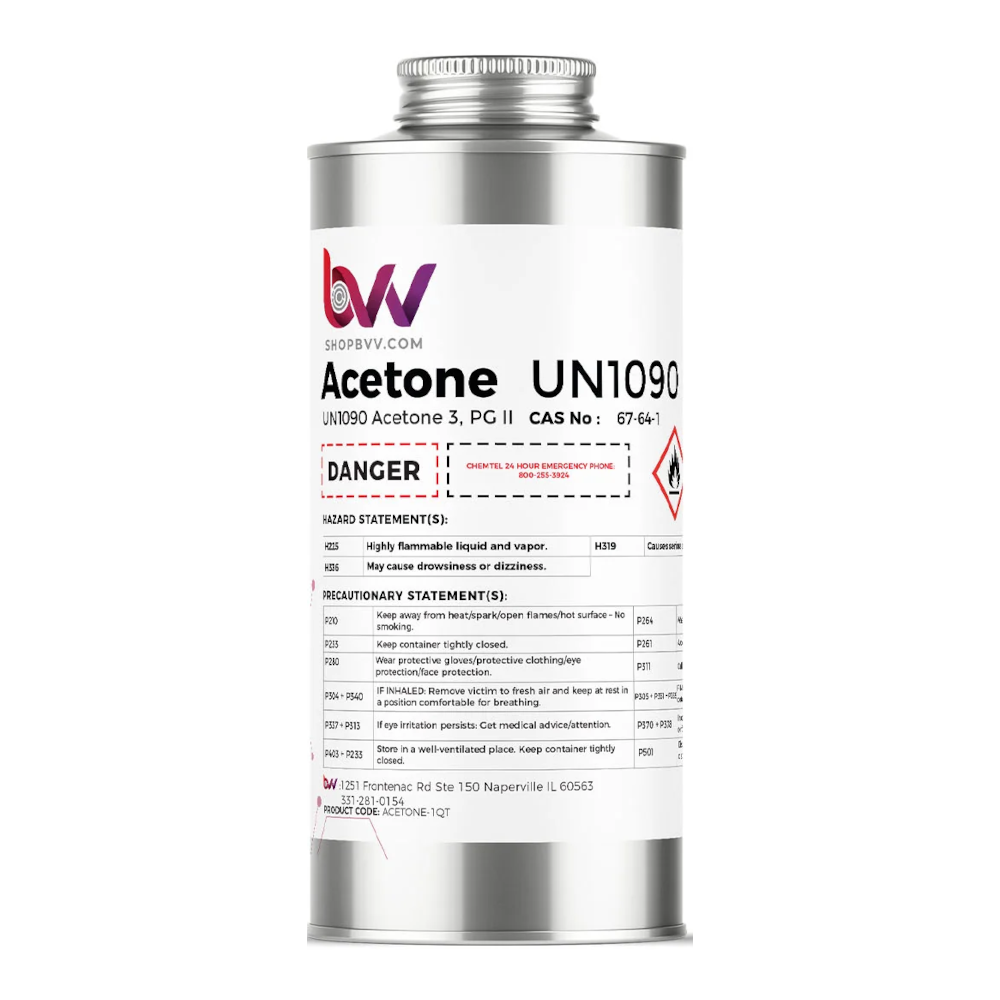
Explore our top-quality Acetone, a versatile solvent that meets the highest standards of quality and purity. Our Acetone is ideal for a wide range of applications, whether you’re in the pharmaceutical, cosmetic or industrial sector. With its exceptional solvent properties, Acetone serves as a reliable solution for cleaning, degreasing, and dissolving various substances.
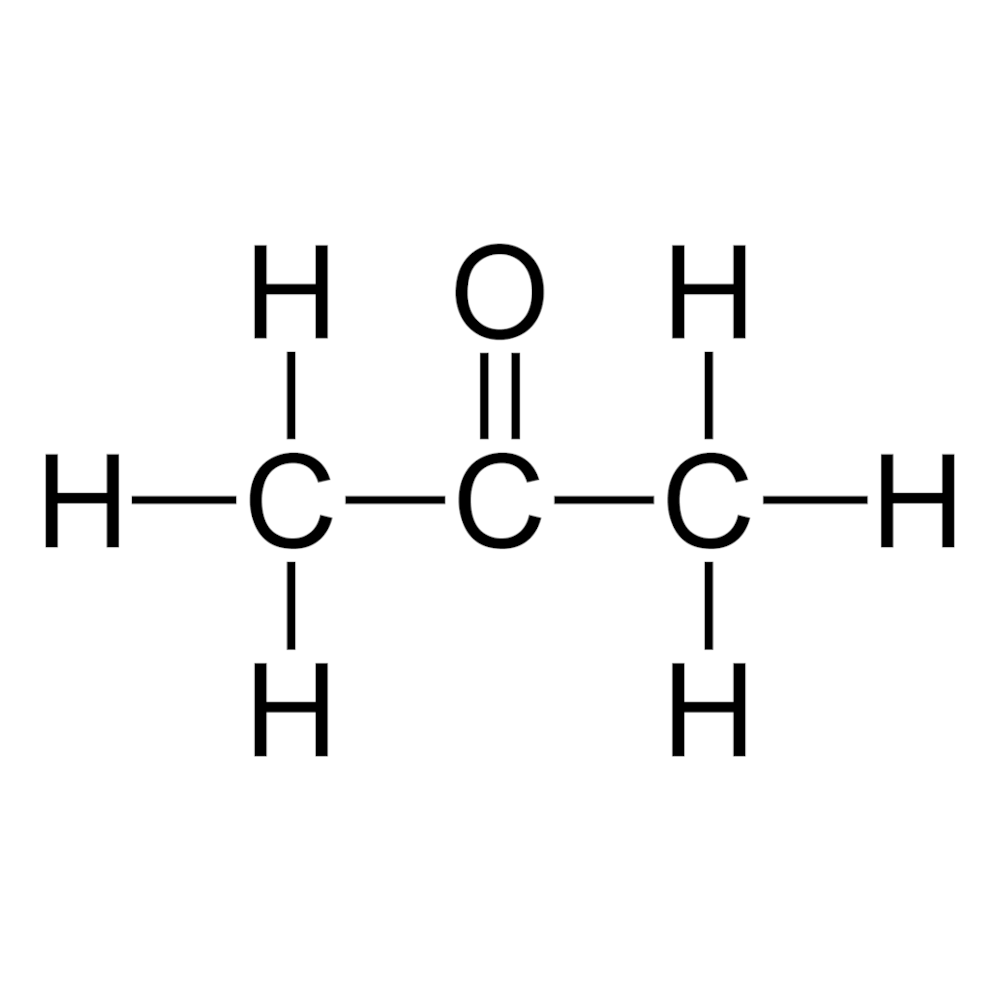
Acetone is a clear, colorless, and highly flammable liquid with a distinctive sweet, fruity odor. It is a simple organic compound with the chemical formula C3H6O, belonging to the ketone family. Acetone is widely used as a solvent in various industries due to its excellent solubility and fast evaporation rate.
In addition to its solvent properties, acetone has many other applications. It is commonly used as a cleaning agent, degreaser, and paint thinner. It is also a key ingredient in nail polish removers and some cosmetic products. Acetone is utilized in the production of plastics, fibers, resins, and various chemicals. Additionally, it serves as a fuel additive and is used for scientific and laboratory purposes.
As a highly versatile and effective solvent, acetone plays a vital role in numerous industrial, commercial, and domestic applications, making it an essential component in various processes.
What Are The Properties of Acetone?
Acetone is a colorless, volatile, and highly flammable liquid with several notable properties:
- Physical State: Acetone is a liquid at room temperature and pressure, with a boiling point of 132.8F/56C and a melting point of -94.9°C (-138.8°F).
- Odor: It has a distinct and characteristic odor that is often described as sweet or fruity.
- Solubility: Acetone is highly soluble in water, alcohols, ethers, and many other organic solvents. This high solubility contributes to its effectiveness as a cleaning agent and solvent.
- Density: The density of acetone is about 0.79 g/cm³, making it less dense than water.
- Vapor Pressure: Acetone has a relatively high vapor pressure, which means that it readily evaporates into the air at room temperature.
- Flammability: Acetone is highly flammable and has a low flash point of -20.8°C (-5.4°F). This means that it can easily ignite when exposed to an open flame, spark, or other sources of ignition.
- Reactivity: Acetone is a reactive compound and can participate in various chemical reactions. It can react with strong acids, bases, and oxidizing agents.
- Acidity: Acetone is a weak acid, and its aqueous solutions can exhibit slightly acidic properties.
- Miscibility: Acetone is miscible with water and many organic solvents. This property makes it suitable for various applications in different industries.
- Polarity: Acetone is a polar solvent, meaning that it has a partial positive and partial negative charge distribution within its molecule. This polarity allows it to dissolve a wide range of polar and nonpolar compounds.
- Boiling Point: Acetone has a relatively low boiling point 132.8F/56C, which makes it easy to evaporate and separate from other substances during distillation processes.
- Evaporation Rate: Acetone has a fast evaporation rate, which makes it suitable for applications where rapid drying is necessary.
It’s important to note that acetone’s properties contribute to its versatility and wide range of applications in various industries, including cleaning, manufacturing, laboratory work, cosmetics, and more. However, due to its flammability and reactivity, proper safety precautions should always be followed when working with acetone.